
Simple Indian home practices, dietary adjustments and lifestyle habits that may help manage IBS symptoms.
Do you frequently experience gas, bloating, abdominal discomfort, constipation or loose motions despite trying different home remedies? Perhaps you have tried ajwain water, jeera water, ginger tea, warm water or several herbal preparations, but your symptoms keep returning. This is a common experience among people living with Irritable Bowel Syndrome (IBS).
The important thing to understand is that IBS is not simply a problem of poor digestion. It involves communication between the gut and brain, intestinal movement and digestive sensitivity. Some home practices may help manage symptoms, but the right approach depends on your bowel pattern and individual food tolerance.
At IBS Clinic – Integrative Gut Health, we believe in understanding the digestive problem before deciding which remedy may be appropriate.
1. Warm Water and Proper Hydration
Maintaining adequate hydration is important for normal digestive function. It is particularly relevant for people experiencing constipation or loose motions.
What you can do:
- Drink water regularly throughout the day.
- Avoid long periods without fluids.
- Maintain adequate hydration during hot weather.
- Use oral rehydration solution when diarrhoea causes significant fluid loss.
Warm water may feel soothing, but there is no strong evidence that it independently cures IBS or improves bowel motility.
2. Ajwain Water for Digestive Discomfort
Ajwain (carom seeds) is traditionally used in Indian households for digestive discomfort. Some people find ajwain water soothing after meals, but strong clinical evidence supporting it as an IBS treatment is lacking. You may use it as a mild traditional beverage if tolerated, but do not depend on it to treat persistent bloating or abdominal pain.
3. Jeera Water (Cumin) for Bloating
Cumin is commonly used in Indian cooking and traditional digestive preparations. Some people prefer drinking lightly prepared jeera water after meals. However, it has not been established as a treatment for IBS-related gas or bloating. Observe your response and avoid preparations that aggravate symptoms.
4. Ginger for Nausea and Digestive Discomfort
Ginger is traditionally used for nausea and digestive discomfort. A mild ginger infusion may be comfortable for some individuals. However, ginger should not be considered a proven treatment for IBS-related intestinal spasms or constipation. If it causes acidity or heartburn, reduce or discontinue it.
5. Peppermint Oil for Abdominal Discomfort
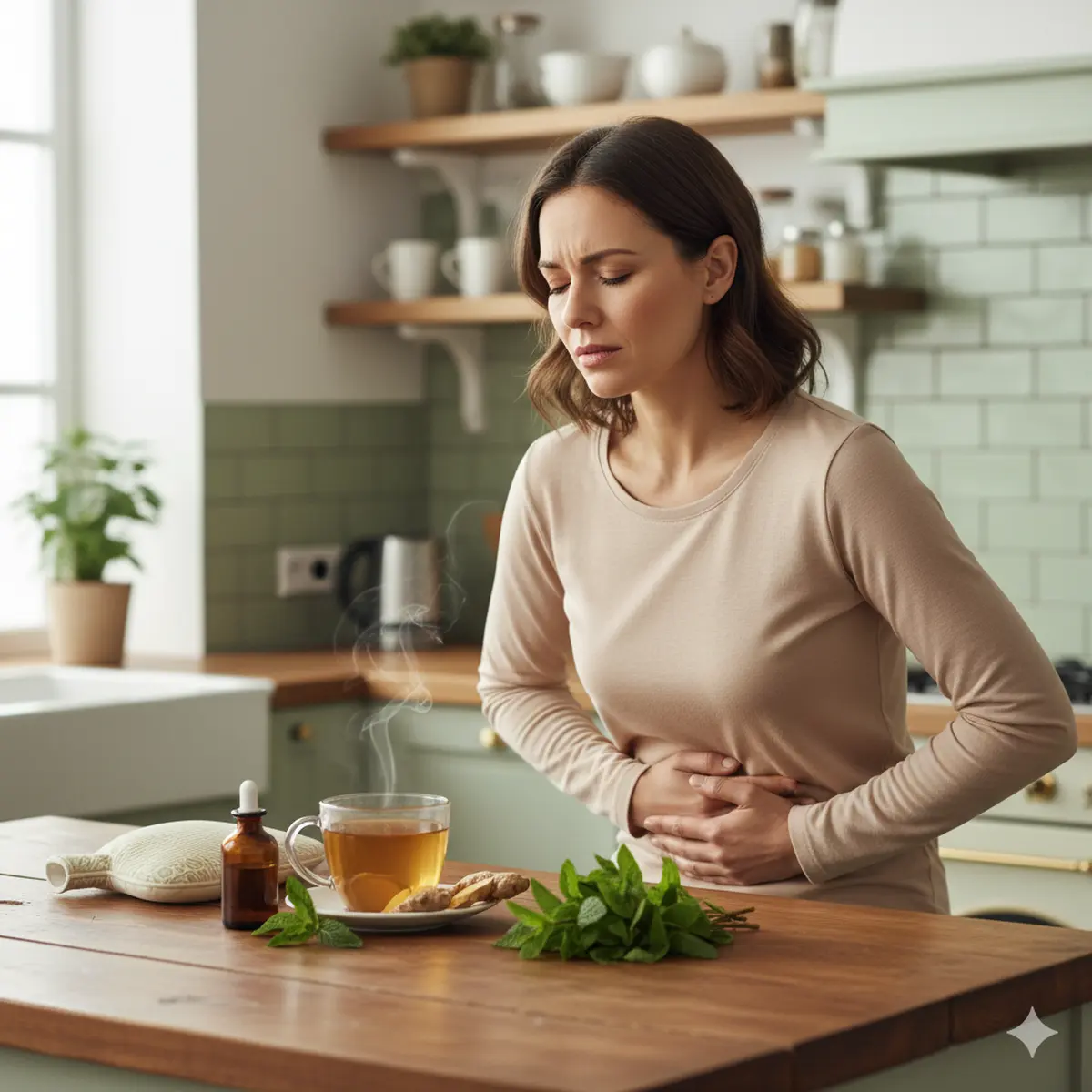
Peppermint oil has some clinical evidence for improving overall IBS symptoms, particularly abdominal pain, and is one of the few remedies suggested for overall IBS symptoms in the ACG guideline. Enteric-coated peppermint oil capsules have been studied more extensively than peppermint tea.
Important considerations:
- Use an appropriate preparation after consulting a healthcare professional.
- Peppermint may aggravate acid reflux or heartburn in some people.
- It is not suitable for everyone.
Do not assume that drinking peppermint tea will provide the same effect as a clinically studied peppermint oil preparation.
6. Warm Compress for Abdominal Cramps
Applying gentle warmth to the abdomen may provide temporary comfort during abdominal cramping.
How to use it:
- Use a warm water bottle or heating pad.
- Wrap it in a towel.
- Apply for approximately 10–15 minutes.
- Avoid excessive heat or direct contact with the skin.
This may help you feel more comfortable, but it does not treat the underlying cause of IBS.
7. Soluble Fibre (Psyllium) for Constipation
Fibre can support bowel function, but the type of fibre matters. Soluble fibre, particularly psyllium husk, has evidence supporting its use in IBS. It may help improve stool consistency and overall symptoms.
Important precautions:
- Start with an appropriate small amount.
- Increase gradually if tolerated.
- Take with adequate water.
- Seek professional advice if you experience difficulty swallowing or possible bowel obstruction.
Suddenly increasing fibre or using excessive amounts may increase gas and bloating.
8. Walking After Meals
A gentle walk after meals can support general digestive health and physical activity. In a randomised trial, people with IBS who became more active had fewer gut symptoms.
Try:
- Walking for 10–15 minutes after meals.
- Avoiding prolonged sitting.
- Maintaining regular physical activity.
Do not force exercise during severe abdominal discomfort.
9. Diaphragmatic Breathing for Gut–Brain Relaxation
The digestive system and brain communicate continuously. Stress and anxiety can influence gut sensitivity, abdominal discomfort and bowel activity. A simple breathing exercise may help:
- Sit comfortably.
- Place one hand on your abdomen.
- Slowly breathe in through your nose.
- Allow your abdomen to expand gently.
- Exhale slowly without forcing your breath.
- Repeat for 5 minutes.
This is a relaxation technique, not a cure for IBS.
10. Regular Meal Timings
Skipping meals, eating in a hurry and consuming very large portions may aggravate symptoms in some individuals.
Try to:
- Maintain reasonably consistent meal timings.
- Eat slowly.
- Avoid very large meals.
- Observe your response to tea, coffee and spicy foods.
- Avoid unnecessary food restrictions.
Eating also stimulates the gastrocolic reflex, a natural response that increases colon activity after meals. Some people with IBS experience a stronger response, resulting in urgency or repeated toilet visits after eating. See gastrocolic reflex dysfunction.
11. A Food and Symptom Diary
One of the most useful home practices is recording your daily food intake and bowel pattern. Note:
- What you eat throughout the day.
- Meal timings and portion sizes.
- When bloating or gas develops.
- Number of toilet visits.
- Stool consistency.
- Whether you experience urgency after meals.
- Whether evacuation feels complete.
The Bristol Stool Chart can help you understand changes in stool consistency. This information can help identify patterns that may otherwise be missed.
12. An Individualized Dietary Approach
There is no single diet suitable for everyone with IBS. Some people experience symptoms after milk or certain pulses, while others tolerate these foods comfortably. A structured low-FODMAP diet, as described by Monash University, may help selected people, but it should involve three stages:
- Temporary restriction of higher-FODMAP foods.
- Systematic reintroduction.
- Long-term personalization.
The restrictive phase should generally not exceed 4–6 weeks without reassessment and dietary guidance. Avoid permanently eliminating multiple food groups without understanding your nutritional requirements. Our IBS diet plan and the list of worst foods for IBS can help.
More Indian Kitchen Remedies People Ask About: Fenugreek and Fennel
Fenugreek (methi) for IBS
Fenugreek seeds contain soluble fibre, and soaked seeds are a traditional morning remedy in many Indian homes. There is no strong clinical evidence that fenugreek treats IBS. Because a sudden increase in fibre can increase gas and bloating, start with a small amount and stop if your symptoms worsen.
Fennel seeds (saunf) for IBS
Fennel seeds are traditionally chewed after meals or taken as a tea for digestive comfort. Evidence for fennel as an IBS treatment is limited, so treat it as a mild traditional habit, not a treatment, and avoid it if it aggravates your symptoms.
When Home Remedies Are Not Enough
Not every digestive problem responds to kitchen remedies. Consider someone who:
- Passes stool daily but never feels completely empty.
- Sits in the toilet for 15–20 minutes.
- Strains despite having soft stools.
- Visits the toilet repeatedly after meals.
- Experiences urgency without necessarily passing loose stools.
These symptoms may involve altered bowel movement, increased gut sensitivity or difficulty coordinating pelvic floor muscles during evacuation. Simply increasing fibre, drinking ajwain water or taking stronger laxatives may not address the actual problem. A proper clinical assessment may be needed to understand the underlying bowel pattern. Read more about incomplete evacuation and pelvic floor dysfunction.
When to Seek Medical Advice
Do not rely on home remedies if you experience:
- Blood in stools or black stools.
- Unexplained weight loss.
- Unexplained anaemia.
- Persistent fever.
- Severe or progressive abdominal pain.
- Persistent vomiting.
- Persistent diarrhoea or signs of dehydration.
- A new and persistent change in bowel habits.
These symptoms require medical evaluation to exclude conditions other than IBS, including inflammatory bowel disease.
The IBS Clinic Perspective: Understand the Problem Before Choosing the Remedy
At IBS Clinic – Integrative Gut Health, we believe that treating every digestive complaint with the same home remedy is not the right approach. Gas, bloating, constipation, loose motions and incomplete evacuation can have different underlying mechanisms. Our assessment focuses on:
- Complete daily eating patterns.
- Stool consistency and frequency.
- Timing of symptoms after meals.
- Gastrocolic reflex and post-meal urgency.
- Incomplete evacuation and straining.
- Individual food tolerance.
- Lifestyle and stress factors.
Our philosophy is simple: do not just try another remedy. Understand why your digestive system is reacting the way it does.
Take the First Step Towards Understanding Your Gut
If you continue experiencing gas, bloating, constipation, loose motions or incomplete evacuation despite trying different home remedies, it may be time to understand your digestive pattern more closely. Book a free initial evaluation for an individualized assessment and personalized digestive care.
Medical disclaimer: This article is intended for educational awareness only. Home remedies are not substitutes for medical diagnosis or treatment. Evidence and individual tolerance vary. Consult a qualified healthcare professional before using herbal preparations, supplements or making significant dietary changes.
Frequently asked questions
Can IBS be managed with home remedies?+
Some home practices, dietary adjustments and lifestyle changes may help manage IBS symptoms. However, they do not cure IBS, and some people require additional treatment.
What are the best Indian home remedies for IBS?+
Indian home practices people commonly use include warm water and good hydration, ajwain water, jeera water, ginger, soluble fibre such as psyllium, walking after meals and regular meal timings. Some provide comfort, but strong clinical evidence for most kitchen remedies as an IBS treatment is lacking, and they do not cure IBS.
Can IBS be treated at home without medication?+
Diet, lifestyle and home practices can help some people manage symptoms without medication, but they do not cure IBS and some people need additional treatment. Seek medical advice for blood in stools, unexplained weight loss, anaemia, persistent fever or severe abdominal pain.
Is ajwain water good for IBS?+
Ajwain water is traditionally used for digestive discomfort, but strong clinical evidence for treating IBS is limited.
Does jeera water reduce bloating?+
Some people find it soothing, but it is not an established treatment for IBS-related bloating.
Is ginger good for IBS?+
Ginger may be helpful for certain digestive complaints, particularly nausea, but it is not a proven treatment for all IBS symptoms.
Is fenugreek (methi) good for IBS?+
Fenugreek seeds contain soluble fibre and are used in traditional Indian practice, but there is no strong clinical evidence that fenugreek treats IBS. A sudden increase in fibre can increase gas and bloating, so start with a small amount and stop if symptoms worsen.
What helps IBS cramps?+
A warm compress may provide temporary comfort during abdominal cramping. Enteric-coated peppermint oil has some evidence for abdominal pain, and slow diaphragmatic breathing may help you relax. None of these treats the underlying cause, so see a doctor if pain is severe or progressive.
Can walking help IBS?+
Regular physical activity, including walking, may support digestive health and help some people manage IBS symptoms.
Is peppermint oil useful for IBS?+
Some evidence supports enteric-coated peppermint oil for overall IBS symptoms, particularly abdominal pain. It may worsen acid reflux in some individuals.
Why do my IBS symptoms return after trying home remedies?+
Because IBS can involve altered gut sensitivity, bowel movement and gut–brain communication. A home remedy may provide temporary comfort without addressing the factors contributing to recurring symptoms.