
Most people think digestion simply means food goes into the stomach, gets digested, and comes out as stool. In reality, digestion is a highly coordinated process involving the brain, nerves, muscles, digestive organs, hormones, digestive enzymes, and trillions of beneficial gut bacteria. Every part has a specific role, and when even one part does not function properly, digestive symptoms can develop.
One of the most common digestive complaints is the feeling of incomplete bowel evacuation—the sensation that the bowel has not emptied completely after passing a bowel movement. This symptom can occur in many digestive conditions and functional bowel disorders, even when routine investigations are normal. It may lead to repeated toilet visits, excessive straining, abdominal pressure, gas, bloating, and the persistent feeling that some stool is still left behind.
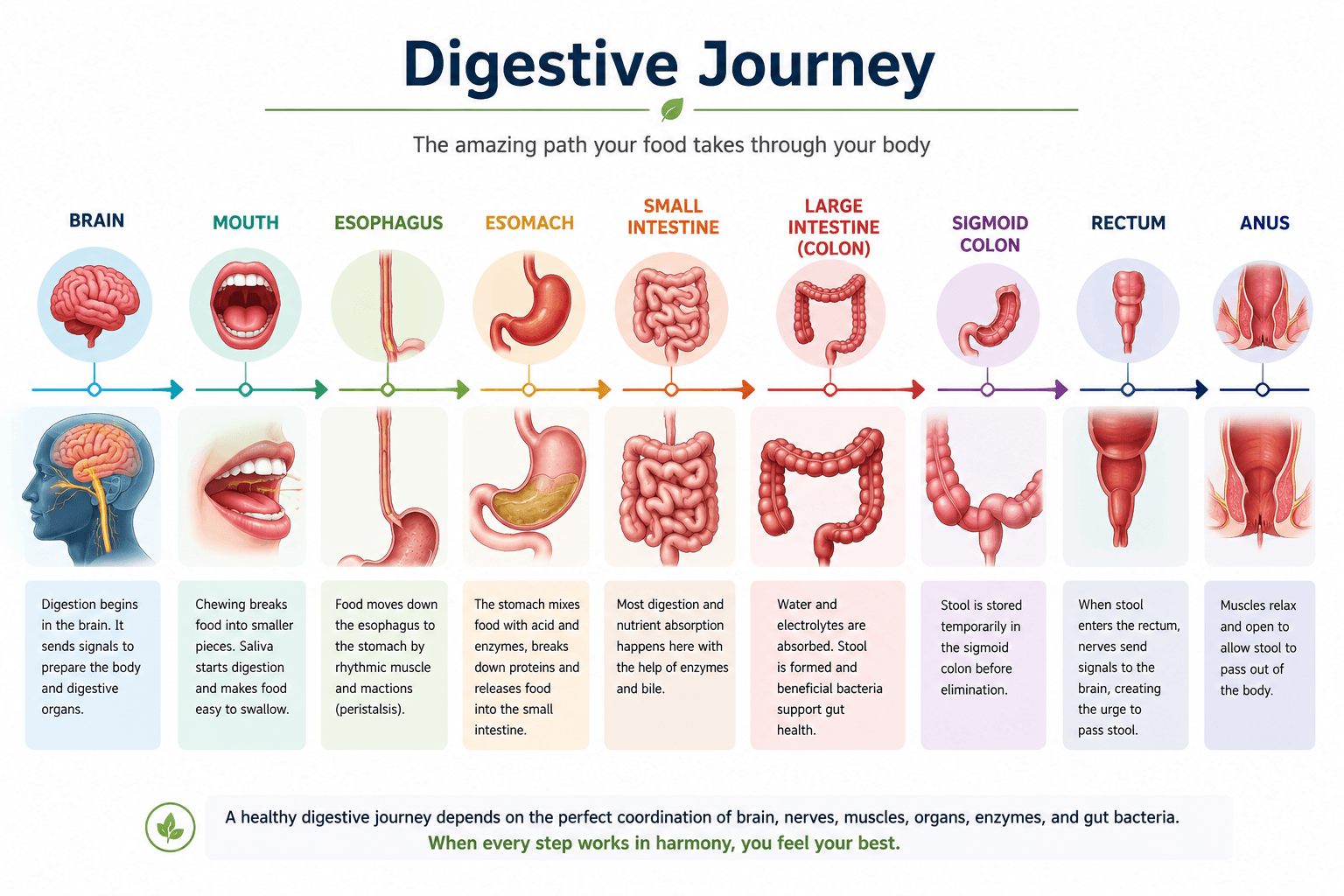 Figure 1. The Digestive Journey
Step 1: The Brain – Where Digestion Begins
Digestion begins even before the first bite. The sight, smell, or even the thought of food signals the brain to prepare the digestive system.
Through the gut-brain axis, the brain stimulates saliva production, stomach acid, digestive enzymes, and intestinal movement. Stress, anxiety, poor sleep, and irregular eating habits can disrupt these signals and affect digestion.
Step 2: The Mouth & Food Pipe (Esophagus)
Digestion starts in the mouth. Chewing breaks food into smaller pieces while saliva begins digesting carbohydrates. Food then moves through the esophagus into the stomach through rhythmic muscle contractions called peristalsis.
Eating too quickly or not chewing food properly places extra strain on the digestive system.
Step 3: The Stomach
The stomach mixes food with stomach acid and digestive enzymes, breaks down proteins, destroys many harmful bacteria, and gradually releases food into the small intestine.
If stomach emptying is too slow or too fast, symptoms such as acidity, fullness, nausea, bloating, indigestion, or early satiety may occur.
Step 4: The Small Intestine – The Main Digestion & Absorption Centre
Most digestion and nutrient absorption take place in the small intestine. Digestive enzymes from the pancreas and bile from the liver break food into nutrients that are absorbed into the bloodstream.
If food remains in the small intestine longer than normal, excessive bacteria may grow, contributing to Small Intestinal Bacterial Overgrowth (SIBO). This may cause gas, bloating, abdominal discomfort, diarrhea, constipation, and food intolerance.
Step 5: The Large Intestine (Colon)
After nutrients are absorbed, the remaining material enters the large intestine (colon).
The colon:
- Absorbs water and electrolytes
- Forms and stores stool
- Houses beneficial gut bacteria
- Produces certain vitamins
- Supports immune health
The amount of water absorbed determines stool consistency.
- Too much water absorbed: Hard, dry stool (constipation)
- Too little water absorbed: Loose or watery stool (diarrhea)
When stool remains in the colon for too long, it continues to lose water, becomes harder to pass, and may contribute to constipation, straining, abdominal discomfort, gas, bloating, and the sensation of incomplete bowel emptying.
Step 6: The Sigmoid Colon – The Stool Storage Area
The sigmoid colon temporarily stores stool before a bowel movement.
If stool remains here for too long, it continues to lose water and becomes harder. This may contribute to abdominal pressure, bloating, repeated urges to pass stool, and the feeling that some stool is still left behind after a bowel movement.
Step 7: The Rectum, Pelvic Floor Muscles & Anus
When stool reaches the rectum, nerves signal the brain, creating the urge to pass a bowel movement.
For a normal bowel movement, the rectum contracts while the pelvic floor muscles and anal sphincter relax at the same time.
Poor coordination between these muscles can lead to:
- Excessive straining
- Difficulty passing stool
- Frequent toilet visits
- Incomplete bowel emptying
- Constipation even when the stool is soft
Step 8: Gut Bacteria – Your Hidden Digestive Partner
Trillions of beneficial gut bacteria help digest food, produce vitamins, support immunity, and protect against harmful bacteria.
When this balance is disturbed (gut dysbiosis), symptoms such as gas, bloating, altered bowel habits, abdominal discomfort, and food intolerance can develop.
Why Stool Should Keep Moving
Healthy digestion depends on food and stool moving through the digestive tract at the right speed.
If movement is too slow, excessive water is absorbed, leading to hard stools, constipation, piles, fissures, abdominal pressure, bloating, and incomplete bowel emptying.
If movement is too fast, insufficient water is absorbed, resulting in loose stools, diarrhea, and possible dehydration.
Why Some Treatments Give Only Temporary Relief
Many people rely on laxatives or medicines for constipation, gas, bloating, or acidity.
These treatments may provide temporary symptom relief. However, if the underlying problem is slow bowel movement, abnormal bowel coordination, excessive water absorption, or impaired bowel emptying, symptoms often return. Long-term improvement usually requires identifying and addressing the underlying digestive dysfunction rather than simply controlling symptoms.
Healthy Digestion Is About Coordination
Healthy digestion depends on:
- Efficient chewing
- Proper stomach digestion
- Healthy digestive enzyme and bile function
- Good nutrient absorption
- Balanced gut bacteria
- Normal movement through the intestines
- Appropriate water absorption
- Proper stool storage in the sigmoid colon
- Good coordination between the rectum, pelvic floor muscles, and anus
When any of these steps is disturbed, digestive symptoms can develop—even if routine investigations appear normal.
How IBS Clinic Can Help
At IBS Clinic, we believe that understanding how your digestive system works is the first step toward improving digestive health.
Rather than focusing only on individual symptoms such as constipation, diarrhea, gas, bloating, acidity, or incomplete bowel evacuation, we evaluate your overall digestive pattern to identify the factors contributing to your symptoms and develop a personalized treatment plan aimed at addressing the underlying digestive dysfunction.
Healthy digestion is not just about what you eat—it is about how your brain, digestive organs, muscles, nerves, enzymes, hormones, and gut bacteria work together to keep food moving, nutrients absorbed, and waste eliminated efficiently.
Frequently asked questions
What is the process of digestion?+
Digestion is the coordinated process by which the body breaks food down into nutrients it can absorb, and moves the remaining waste out as stool. It involves the brain, nerves, muscles, digestive organs, hormones, digestive enzymes, and trillions of beneficial gut bacteria working together.
What are the steps of digestion in human beings?+
There are eight stages: (1) the brain prepares the body for food, (2) the mouth and esophagus chew and transport it, (3) the stomach mixes it with acid and enzymes, (4) the small intestine completes digestion and absorbs nutrients, (5) the large intestine absorbs water and forms stool, (6) the sigmoid colon stores stool, (7) the rectum, pelvic floor muscles and anus pass it out, and (8) gut bacteria support the whole process throughout.
What happens to food in the stomach?+
The stomach mixes food with stomach acid and digestive enzymes, breaks down proteins, destroys many harmful bacteria, and gradually releases food into the small intestine. If stomach emptying is too slow or too fast, symptoms such as acidity, fullness, nausea, bloating, indigestion or early satiety may occur.
Where does most digestion and absorption of food take place?+
In the small intestine. Digestive enzymes from the pancreas and bile from the liver break food into nutrients that are absorbed into the bloodstream. If food remains in the small intestine longer than normal, excessive bacteria may grow, contributing to Small Intestinal Bacterial Overgrowth (SIBO).
What does the large intestine do during digestion?+
The large intestine (colon) absorbs water and electrolytes, forms and stores stool, houses beneficial gut bacteria, produces certain vitamins, and supports immune health. The amount of water absorbed determines stool consistency — too much gives hard, dry stool, too little gives loose or watery stool.
Why does digestion feel incomplete even after passing stool?+
The feeling of incomplete bowel evacuation usually points to a problem with movement, storage or coordination rather than the food itself. Stool sitting too long in the colon or sigmoid colon keeps losing water and becomes harder, and poor coordination between the rectum, pelvic floor muscles and anal sphincter can leave the bowel feeling unfinished — even when stool is soft.
Can digestion be a problem even if all my test reports are normal?+
Yes. Symptoms such as gas, bloating, altered bowel habits and incomplete bowel emptying can occur in functional bowel disorders where routine investigations look normal. The issue is how the digestive system is functioning — its speed, coordination and bacterial balance — not visible damage.
Why do laxatives and acidity medicines only help temporarily?+
They relieve the symptom, not the cause. If the underlying problem is slow bowel movement, abnormal bowel coordination, excessive water absorption or impaired bowel emptying, symptoms return once the medicine stops. Long-term improvement usually requires identifying and addressing the underlying digestive dysfunction.